The Mechanics of Interconnected Growth
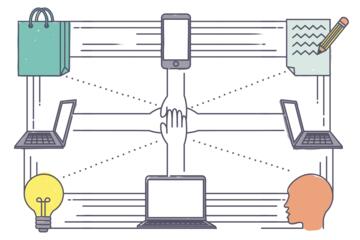
In the current market, a company doesn’t compete just on its product; it competes on the speed of its internal information. System integration is the process of linking different computing systems and software applications physically or functionally to act as a coordinated whole. It is the "nervous system" that allows your CRM to speak to your ERP, and your warehouse management system (WMS) to update your e-commerce storefront in real-time.

Consider a retail giant like Walmart. Their digital transformation wasn’t just about a better website; it was about integrating supply chain data with predictive AI. When a hurricane is forecasted, their systems automatically redirect shipments of strawberry Pop-Tarts to affected areas based on historical data. That is integration in action—turning raw data into immediate, localized revenue.
Statistically, the impact is undeniable. According to MuleSoft’s Connectivity Benchmark Report, the average enterprise now uses 976 individual applications, yet only 28% of them are integrated. This gap represents a massive loss in ROI for every dollar spent on SaaS licenses.
The Hidden Costs of Fragmented Infrastructure
Most organizations suffer from "accidental architecture"—a chaotic web of platforms added over years without a master plan. The primary pain point is the Manual Data Entry Loop. When an employee has to copy information from a Salesforce lead into an Oracle billing system, the probability of error increases by 400% compared to automated syncs.
Another critical issue is Latency in Decision Making. If your marketing team is running Google Ads based on inventory data that is 24 hours old, you are burning ad spend on out-of-stock items. This "information lag" is a silent killer of profitability in high-velocity industries like fintech or e-commerce.
Finally, there is the Security Blind Spot. Every unmanaged API or manual file export (CSV/Excel) represents a potential data leak. Without a centralized integration layer, IT departments lose visibility into where sensitive customer data is actually traveling, making GDPR or CCPA compliance a nightmare.
Breaking the Silo Mentality
Internal departments often guard their data like treasure, fearing that integration leads to a loss of control. In reality, silos create "versions of the truth." Marketing sees one set of customer behavior, while Finance sees another. Integration forces a single source of truth, which is the baseline for any AI or Machine Learning initiative.
The technical Debt Trap
Companies often opt for "quick fix" point-to-point integrations. While cheap initially, this creates a "spaghetti code" mess that breaks whenever one software updates its version. Modern integration requires a move toward API-led connectivity, which treats every system as a reusable building block.
Scalability Bottlenecks
Without a robust integration framework, scaling is impossible. If doubling your customer count requires doubling your back-office staff to handle data transfers, your business model is fundamentally flawed. Scalability is defined by the ability of systems to handle 10x volume with 0x increase in manual labor.
Customer Experience Fragmentation
A customer doesn't care that your Support team uses Zendesk while your Sales team uses HubSpot. They expect both teams to know their history. Integration failures lead to "The Amnesic Brand," where the customer has to repeat their problem every time they are transferred.
Operational Invisibility
Executive leadership cannot steer a ship if the dashboard is broken. Integrated systems provide real-time KPIs. Without them, leadership is "flying blind," relying on gut feelings rather than hard data to allocate capital and human resources.
Strategic Pathways to Seamless Connectivity
To achieve a successful transformation, you must prioritize iPaaS (Integration Platform as a Service) solutions. Tools like Workato, Zapier Central, or MuleSoft Anypoint allow for the creation of automated workflows that trigger actions across multiple apps. For example, when a contract is signed in DocuSign, the system should automatically provision a user account in AWS, create a project in Asana, and send an invoice via Stripe.
Implementing an Event-Driven Architecture (EDA) is another high-impact move. Instead of systems "polling" each other for updates every hour, an EDA uses "listeners" that react instantly to events. If a customer cancels a subscription, the "event" immediately triggers a retention email and notifies the account manager. This reduces system load and improves response times by up to 90%.
For data-heavy industries, ETL (Extract, Transform, Load) pipelines remain vital. Using services like Fivetran or Airbyte to move data into a warehouse like Snowflake or Google BigQuery ensures that your analytics are built on clean, normalized data. This isn't just about storage; it's about making data "query-ready" for executive dashboards.
Real-World Integration Success Stories
Case Study 1: Global Logistics Provider
A mid-sized logistics firm was struggling with a 15% error rate in shipping labels because their warehouse software was disconnected from their CRM. By implementing a custom middleware solution using Node.js and RabbitMQ, they achieved 100% data parity. Result: Manual data entry hours were reduced by 40 hours per week, and shipping accuracy hit 99.8% within three months.
Case Study 2: E-commerce Scale-up
A fashion retailer using Shopify Plus and NetSuite ERP had a "ghost inventory" problem where sold-out items appeared in stock. They deployed a real-time sync via Celigo. Result: Overselling dropped to zero, and they were able to implement "Buy Online, Pick Up In-Store" (BOPIS), which increased their average order value (AOV) by 22%.
Comparing Integration Methods
| Method | Best For | Pros | Cons |
|---|---|---|---|
| Point-to-Point (P2P) | Small businesses with <3 apps | Fast to set up, low initial cost | Hard to maintain, not scalable |
| iPaaS (e.g., Workato) | Rapidly growing SMEs/Enterprises | Low-code, hundreds of connectors | Monthly subscription costs |
| Enterprise Service Bus (ESB) | Large legacy environments | High security, handles complex logic | Requires high technical expertise |
| Custom API Middleware | Proprietary hardware/software | Total control, unique features | High development and upkeep costs |
Common Pitfalls and How to Avoid Them
The most frequent error is Ignoring Data Quality. Integration is a "garbage in, garbage out" process. If your CRM has duplicate entries, integrating it with your billing system will simply double the mess. Always perform a "data scrub" before initiating any sync. Use tools like DemandTools to deduplicate and standardize records.
Another mistake is Over-Engineering. Not every system needs to be integrated in real-time. Do you need your office coffee machine's usage data in your ERP? Probably not. Focus on the "Golden Record"—the core data sets (Customer, Product, Order, Employee) that drive revenue and risk management.
Finally, many fail to plan for Error Handling. What happens if the API is down for 10 minutes? Without a "retry logic" or an alert system (like PagerDuty), data packets will be lost forever. Always build in a buffer and a logging system so you can audit failed transactions and re-run them once the connection is restored.
Frequently Asked Questions
What is the difference between system integration and data migration?
Data migration is a one-time move of data from one system to another (e.g., moving from an old server to the cloud). System integration is an ongoing, real-time connection where systems continuously share information back and forth.
How long does a typical integration project take?
A simple iPaaS connection between two modern SaaS apps can take a few days. However, a complex enterprise-wide integration involving legacy on-premise software and custom APIs typically takes 3 to 6 months to fully test and deploy.
Will integration replace my need for custom development?
iPaaS tools reduce the need for custom code for standard tasks, but they don't eliminate it. You will still need developers to handle complex business logic, unique security protocols, and optimizing performance for high-load scenarios.
Is integration secure?
If done correctly using OAuth 2.0, encryption at rest, and secure gateways, integration actually improves security by eliminating manual file transfers. However, using outdated protocols like FTP without encryption is a major risk.
How do I calculate the ROI of system integration?
Measure the time saved (Labor hours x Hourly rate), the reduction in error-related costs (Refunds/Corrections), and the "Opportunity Gain" (e.g., being able to fulfill 20% more orders with the same staff).
Author’s Insight
In my 15 years of technical consulting, I’ve seen more digital transformations fail due to "integration fatigue" than budget cuts. Companies start too big. My advice: pick one high-friction point—like the gap between Sales and Finance—and solve that first. Once you prove the ROI of a single automated workflow, the cultural buy-in for a full ecosystem becomes much easier to secure. Integration is a marathon of small wins, not a single sprint.
Conclusion
System integration is the bridge between owning software and actually benefiting from it. To start, audit your tech stack and identify where manual data entry is highest. Invest in a flexible iPaaS platform rather than hard-coded fixes, and ensure your data is clean before connecting systems. By centralizing your data flow, you don't just work faster; you build a resilient, scalable foundation that can support future innovations like AI and predictive analytics. Start small, integrate the "Golden Records," and expand as your operational clarity grows.